DNR Services LLC · Phoenix, AZ
Water Damage in Phoenix, AZ: First 24 Hours Checklist
Water Damage in Phoenix, AZ: First 24 Hours Checklist
Water just hit your Phoenix home — a slab leak that finally surfaced, an AC condensate failure, a burst supply line, or monsoon-driven roof penetration. What you do in the next 24 hours determines whether you face a $3,000 cleanup or a $30,000 mold remediation six months later.
This checklist walks through the first-24-hours action plan for Phoenix homeowners — the safety moves, the documentation that protects your insurance claim, and the Arizona-specific factors that change the playbook.
Key Takeaways
- Mold establishes within 24-48 hours of water exposure per the EPA brief guide on mold and moisture — speed matters more than scope.
- Document every soaked surface and damaged item BEFORE cleanup begins. No photos = weaker insurance claim.
- Phoenix slab leaks and AC condensate failures often run for weeks before discovery, compressing your response window.
Step 1: Safety First (Minutes 0-15)
If water has reached outlets, breakers, or appliances, shut off power at the main breaker before stepping into the affected area. Wet electrical contact is the #1 cause of injury during DIY water damage response. If standing water is more than ankle-deep or smells of sewage, evacuate and wait for professional response.
Step 2: Stop the Water Source (Minutes 15-30)
Locate and shut off the main water valve to your home (usually near the meter or where the supply line enters). For appliance leaks, the individual shutoff at the appliance works faster. For roof leaks, get tarps over the affected area as soon as it's safe — temporary roof tarping is reimbursable mitigation, not unauthorized repair.
Step 3: Document Everything (Hour 1)
Before moving a single piece of furniture, photograph and video every affected room. Get wide shots, close-ups of damaged items, and timestamps. Phoenix-specific note: if the source is a slab leak or AC condensate, photograph the diagnostic moment when the source is confirmed. Insurance adjusters scrutinize gradual-vs-sudden damage closely in Arizona.
Step 4: Call Your Insurance Carrier
File the claim within hours, not days. Get the claim number, adjuster contact, and confirmation of what coverage applies (deductible, ALE for displacement, mold sub-limits). For Arizona homeowners, ask explicitly whether your policy covers slab leak repair AND resulting water damage — many policies cover one but not the other.
Step 5: Call an IICRC-Certified Restoration Company
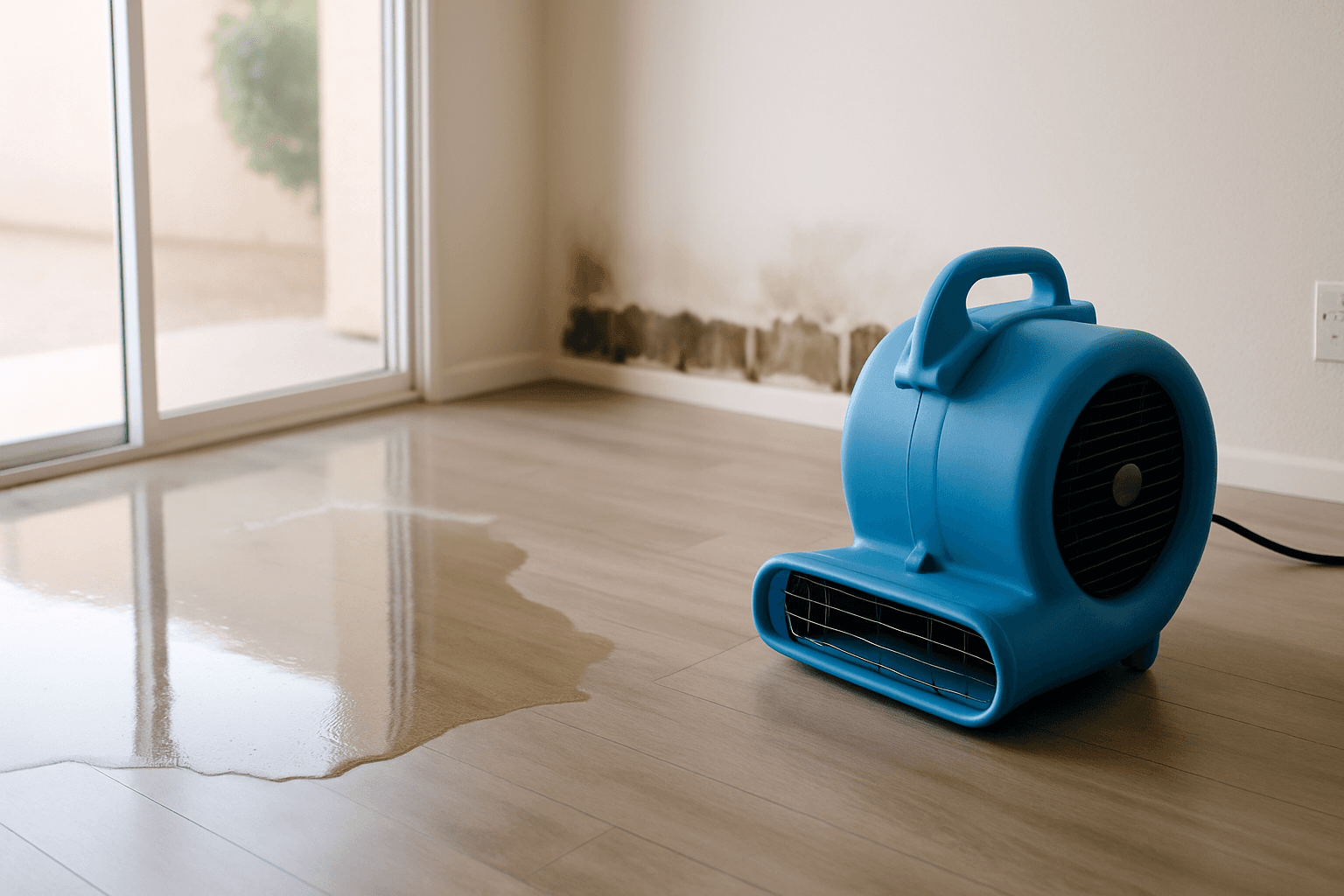
Mitigation is your responsibility under the policy. Call a real IICRC-certified restoration team for emergency extraction within 90 minutes. They bring commercial dehumidifiers, air movers, moisture meters, and thermal imaging — equipment that meets the IICRC S500 drying standard. Consumer fans don't reach drying targets fast enough to prevent mold in Phoenix humidity.
Step 6: Begin Safe Mitigation Yourself While Waiting
- Move undamaged items out of the affected area
- Lift wet rugs and area carpets off hardwood floors
- Open windows and doors if outdoor humidity allows (Phoenix dry climate helps)
- Mop or wet-vac standing water if safe
- Save all receipts for emergency supplies — they're reimbursable
Step 7: Avoid These Costly First-Day Mistakes
- Don't use household fans alone — they spread moisture without removing it
- Don't lift carpet pad — leave it for the pro extraction crew
- Don't throw out damaged items until the adjuster has documented them
- Don't sign Assignment of Benefits (AOB) on the spot — Arizona has had abuse issues here
- Don't wait to call: every hour past 24 increases mold risk significantly
Phoenix-Specific Factors That Change the Playbook
Three Arizona realities shorten your effective response window. Slab leaks frequently run for weeks before visible signs appear — by the time you see staining, materials have been wet long enough that mold has likely established. AC condensate failures cause hidden ceiling drywall saturation that only shows when the drip ring appears. Monsoon-season roof penetrations combine with high indoor humidity to accelerate mold growth even though outdoor humidity stays low.
Frequently Asked Questions
How long do I have before mold starts growing after water damage?
The EPA states mold can begin growing within 24-48 hours of water exposure. In Phoenix, hidden moisture (slab leaks, AC condensate) often means materials have been wet for weeks before you notice — by then mold is usually already established.
Should I file a water damage claim with my insurance?
Sudden, accidental water damage (burst pipe, appliance failure, AC condensate failure) is typically covered in Arizona. File within hours of discovery. Document everything before mitigation begins. Skip the claim only if total damage is below your deductible and you can confirm no hidden damage.
What does water damage restoration cost in Phoenix?
Minor losses (single room, clean water, caught early): $1,800-$4,500. Major losses (multiple rooms, contaminated water, mold remediation): $8,000-$25,000+. Insurance typically covers a covered loss minus your deductible.
Can I dry out water damage myself in Arizona's dry climate?
Phoenix dry air helps, but consumer fans alone don't reach IICRC moisture content targets fast enough to prevent mold. Commercial dehumidifiers (90-150 pint) plus high-velocity air movers, moisture meters, and 3-5 days of monitored drying are required for proper mitigation.
Phoenix Water Damage? Don't Wait Past Hour One
Every hour past the first 24 increases mold risk and shrinks the scope your insurance will cover without dispute. The single biggest variable in water damage outcomes is response time.
Get same-day emergency extraction and drying from Water Damage Restoration in Phoenix. IICRC-certified, equipped for slab leaks and monsoon damage across San Tan Valley, Anthem, and Buckeye, with direct insurance billing and documentation that protects your claim.